Cheapest Countries to Study in Europe in 2026
Compare lower-cost European study destinations by tuition, living expenses, scholarships, language, and total degree cost.
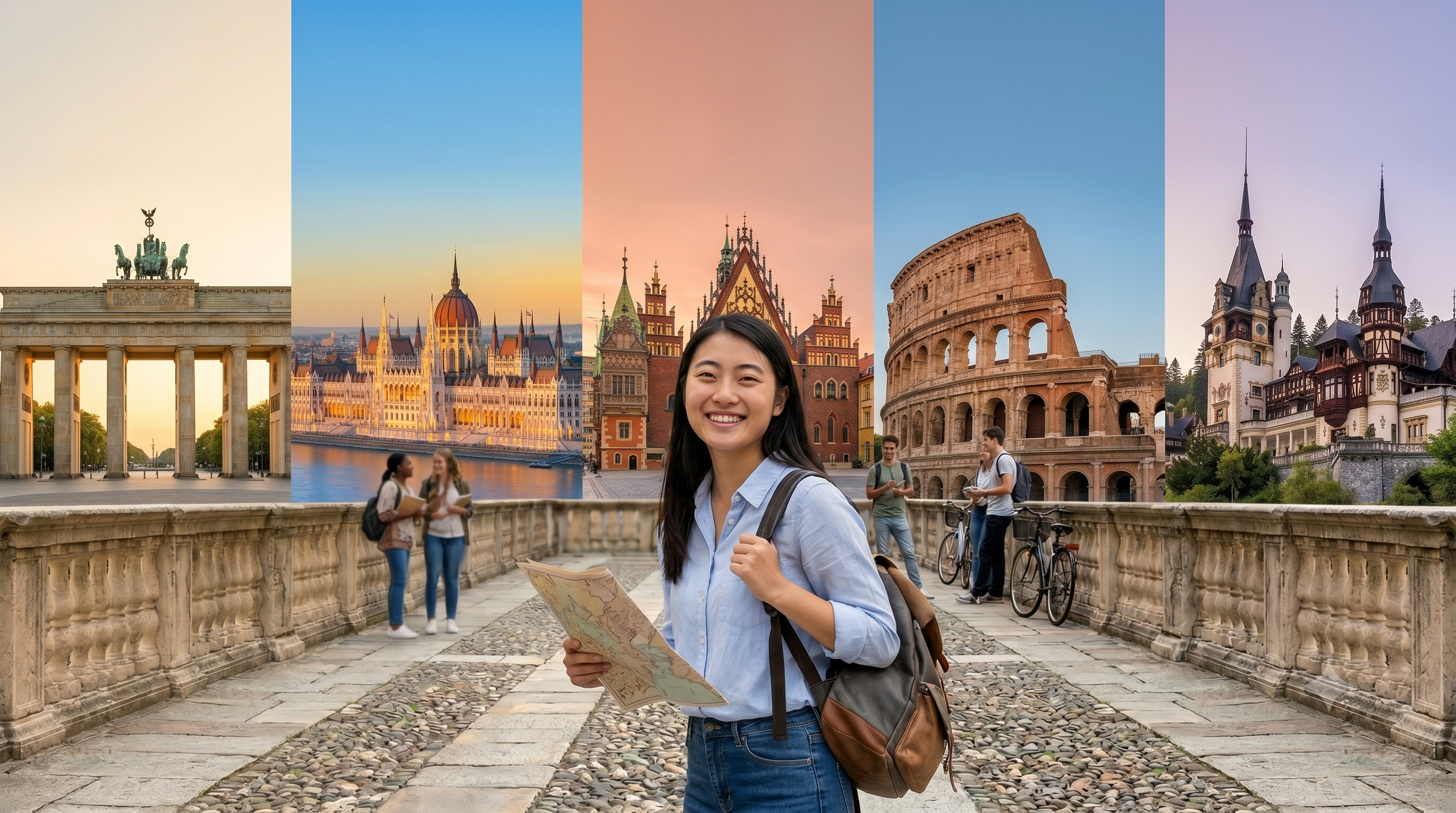
Cheapest Countries to Study in Europe in 2026
The cheapest country is not always the one with the lowest advertised tuition. A realistic comparison must include rent, health insurance, visa funding requirements, university charges, travel, and the probability of receiving financial support.
How to compare total study cost
Use five variables:
- Annual tuition and mandatory university fees
- Monthly living costs in the actual city
- Visa proof-of-funds requirements
- Scholarship availability and eligibility
- Degree length and likely annual increases
A tuition-free programme in an expensive city can cost more overall than a tuition-charging programme in a lower-cost city.
Lower-cost destinations to investigate
Germany
- Tuition pattern: Low or no standard tuition at many public universities; exceptions apply
- Living-cost pattern: Moderate to high depending on city
- Major funding route: DAAD and university funding
Italy
- Tuition pattern: Public fees may vary by income, university, and status
- Living-cost pattern: Moderate; Milan and Rome are higher
- Major funding route: Regional right-to-study schemes
Hungary
- Tuition pattern: Moderate self-funded tuition; medical programmes cost more
- Living-cost pattern: Moderate, with Budapest higher
- Major funding route: Stipendium Hungaricum
Poland
- Tuition pattern: Moderate tuition for many English-taught programmes
- Living-cost pattern: Moderate
- Major funding route: Government and university scholarships
Romania
- Tuition pattern: Often lower tuition and living costs
- Living-cost pattern: Low to moderate
- Major funding route: Government and university funding
Bulgaria
- Tuition pattern: Often lower tuition and living costs
- Living-cost pattern: Low to moderate
- Major funding route: Limited and programme-specific funding
Czechia
- Tuition pattern: Czech-taught public study may have different fee treatment from foreign-language programmes
- Living-cost pattern: Moderate
- Major funding route: Government, university, and mobility schemes
Slovakia
- Tuition pattern: Moderate tuition for many foreign-language programmes
- Living-cost pattern: Low to moderate
- Major funding route: Bilateral and university schemes
The table is a screening tool, not a price quote. Costs vary by university, field, city, nationality, and academic year.
Total cost of a degree
To estimate a two-year master's degree, calculate:
Total cost = tuition + mandatory fees + 24 months of living costs + visa and setup costs + travel + contingency
Include at least a 10% contingency for:
- Rent increases
- Currency changes
- Additional document legalisation
- Delayed scholarship payments
- Medical expenses
- Temporary accommodation
- Deposit and agency fees
Scholarship comparison
Hungary
Stipendium Hungaricum can provide tuition support, a stipend, accommodation support, and health coverage under the terms of the annual call.
Germany
DAAD administers numerous funding programmes. Eligibility and benefits depend on the specific scholarship.
Italy
Regional schemes may provide tuition exemption, meals, accommodation, and cash support based on financial and merit rules.
Poland, Romania, Czechia, Slovakia, and Bulgaria
Funding may come from government programmes, bilateral agreements, universities, Erasmus+, or field-specific schemes. Availability is less uniform and must be checked programme by programme.
Hidden costs
Students frequently omit:
- Visa application fees
- Residence-permit fees
- Health insurance
- Language tests
- Application fees
- Translation and apostille costs
- Credential evaluation
- Blocked-account or proof-of-funds requirements
- Housing deposit
- Temporary accommodation
- Flights
- Laptop and study equipment
- Winter clothing
- Local registration costs
These costs can materially change the ranking of supposedly cheap destinations.
Recommendations by student profile
Lowest tuition priority
Investigate public university options in Germany and income-adjusted public university routes in Italy. Confirm exceptions before relying on zero or minimum tuition.
Full-scholarship priority
Investigate Stipendium Hungaricum, Erasmus Mundus, DAAD schemes, and government scholarships available to your nationality.
Lowest living-cost priority
Compare smaller cities in Romania, Bulgaria, Poland, Slovakia, Hungary, and Czechia rather than capital cities alone.
Medicine priority
Compare tuition, accreditation, clinical language, licensing pathway, and total six-year cost. A low first-year price is not enough.
Employment priority
Compare labour-market demand, language requirements, graduate residence options, professional licensing, and salary-to-rent ratios.
Next step
Use the comparison tool to calculate the likely total cost for your preferred countries and cities.
Verification note: Tuition, living costs, scholarships, visa funding requirements, and work rights change regularly. Use current official university, government, and scholarship sources before making a financial decision.
Frequently Asked Questions
Which European country has the lowest tuition?
There is no single answer. Some public universities charge little or no standard tuition, but exceptions and mandatory fees apply.
Can international students study in Europe for free?
A fully funded scholarship or a tuition-free public programme can reduce education costs, but living, insurance, visa, and setup expenses remain.
Is eastern Europe always cheaper?
Often, but not automatically. Capital-city housing, medical tuition, private universities, and inflation can remove the expected saving.
Which country is easiest to enter?
Admission difficulty depends on the programme, university, applicant profile, and number of places. A country cannot be accurately labelled easy as a whole.
Should I choose the cheapest option?
No. Choose the lowest-cost option that is academically credible, financially sustainable, legally accessible, and aligned with your career plan.
Which country is cheapest after scholarships?
That depends on the scholarship received. A fully funded award in a higher-cost country can be cheaper than a self-funded programme in a lower-cost country.
How much emergency money should I keep?
A contingency equal to at least one to three months of living costs is prudent, especially for deposits, delayed scholarship payments, temporary accommodation, or unexpected travel.
Compare countries side by side
Build a realistic shortlist using tuition, living costs, scholarships, language, and post-study considerations.
Compare European countries